Category: Uncategorised
Podcast: Research and Final Proposal.
Introduction.
A podcast is an online series of audio files made available for a listener to download, commonly for free. If a person enjoys a podcast, they can subscribe to it and the episodes will download automatically onto the person’s device. Podcasts come in different lengths and cover hundreds of genres and topics, EG, fashion, crime or music. Podcasts can be only one person commentating, a panel of regular guests who are consistent throughout the series, or one interviewer and an interviewee (changed every or every other episode).
Codes and Conventions.
My first example of a podcast is ‘The Collector’s House’ by matchesfashion.com. This podcast has one interviewer who remains consistent throughout the series, Danielle Radojcin. Danielle interviews guests in a laid back manner; she allows the guests to steer the interviews and personalises her questions based upon their response. It doesn’t feel structured or uncomfortable but more like an easy flowing conversation, making it more pleasurable for the listener. In this podcast, guests are asked to pick five things that represent and inspire them, this ranges from rock stars to furniture.
This podcast’s genre changes by the episode, it does not have one consistent genre or topic. Overall, fashion and interior design would be the most common topics to appear throughout the podcast series due to the guests Danielle invites on and what their responses are. The target audience of this podcast is wide and varied as a result of this. Each episode attracts a different demographic due to the guest, some of these listeners will subscribe to the podcast if they enjoy the style. Each episode begins with a piece of light, simple music underneath a brief introduction of the podcast as a whole and then the guest on that particular episode. This music ends by the time the interview begins.
Another podcast example is ‘George Ezra and Friends’ by George Ezra. George Ezra is the presenter and interviewer in this podcast and he interviews other musicians about their careers and personal lives. The genre of this podcast is very straightforward and obvious, it’s music. Ezra has guests ranging from Ed Sheeran to Elton John, attracting different demographics with each guest. The podcast has no particular structure that stands out from episode to episode, but Ezra does have a more traditional means of interviewing somebody; asking questions to get a specific answer but he also mixes personal opinions in the question.
Each episode opens with an airy vocal and a tropical sounding snippet. The volume decreases when Ezra begins introducing the podcast and the specific guest. Ezra’s podcast has a break in the middle of each episode to include an advert from a sponsor of the podcast and Ezra also updates the listener on his life as a pop star on tour/ making music. The average length of one episode is 45 minutes, however some can be over an hour or just a little over half an hour.
Content Research.
My podcast will primarily be on Gucci’s 2019 Cruise campaign, which features Harry Styles. However, the podcast will be a panel style meaning the other people (Ash, Liz and Ellie) will be able to contribute their own opinions or expand on a conversation which may steer away from the initial topic. I will cover information on this specific campaign, Harry’s previous campaign with Gucci and past stars who have appeared in Gucci campaigns.

Articles about the campaign:
https://www.vogue.co.uk/gallery/harry-styles-gucci-cruise-2019-mens-tailoring-campaign
https://www.gq-magazine.co.uk/gallery/harry-styles-gucci-cruise-2019-campaign
https://www.wonderlandmagazine.com/2018/09/18/harry-styles-gucci-cruise-2019/

Information on the campaign.
- Shot by Glen Luchford in the north of Rome.
- Animals were included which has been a common theme in previous Gucci campaigns for men’s tailoring, for example, Tom Hiddlestone’s 2016 campaign included dogs.
- This is Styles’ second Gucci campaign, his first being the men’s tailoring AW 2018-19, also captured by Glen Luchford.
- The rest of the campaign is expected to be released in November 2018 but no specific date has been released.

Target demographic & psychographics.
My target audience for age would be 16-30 but is not restricted to that, anybody younger or older can also enjoy it. I think this is a suitable target age range as the topic covered isn’t explicit or directed at a very specific age group. I want to present this podcast in a mature manner but not to the point it feels uncomfortable or unnatural. I don’t have a target gender for my podcast, anybody who is interested will be able to enjoy this podcast. Naturally, it will be more feminine as the panel has a larger female to male ratio but this does not mean males that are interested in the topic should avoid it. For socio-economic status, I would say this podcast is aimed at middle class and upwards as the podcast is to discuss a high fashion brand. For geographical location, naturally I would have a British target audience as all 4 members of the panel are British and so is Harry Styles. However, as the shoot was shot in Rome, that may appeal to an Italian audience. For psychographics, I am targeting anybody with an interest in high fashion, or more specifically Gucci and Harry Styles.
Podcast: Initial Proposal
What is the podcast about?
I’m making my podcast about Gucci’s Cruise 2019 campaign which features Harry Styles. It is Styles’ second campaign (his first being his mens tailoring campaign which included a video advertisement with Michelle by the Beatles played in the background). The full campaign is released in November 2018 but some images were released in September. The shoot was photographed by Glen Luchford in the north of Rome and features multiple baby animals alongside Harry.
What is the purpose of the podcast?
The purpose of this podcast will be to entertain, inform and possibly debate.
Target audience?
The target audience for my podcast will be anybody who is interested and not limited to a certain audience to attract most people. All genders, and ages 15-35 and anybody with an interest in fashion, and more specifically high fashion and/ or Gucci.
News Values?
- Celebrity
- Good news
- Visual imperative
How will I not breach the Editor’s Code?
I will be sure to take care when publishing information and make sure it is accurate to avoid breaching the accuracy clause (clause 1).
Journalism Genres
Journalism Formats Research
What is a podcast?
A podcast is a digital recording published on the internet for a public audience to listen to, usually as apart of a series. Common genres of podcasts can be to do with music, fashion, lifestyle or travel.
Fashion No Filter – with Monica Ainley and Camille Charriere.
This podcast describes itself as ‘a unique, behind the scenes look at how the fashion industry operates’. The podcast is free for listeners to download and listen to on iTunes. Their target audience is a mixture of late gen-z’s and early millennial women. Although this is their target demographic, the podcast is not restricted to this demographic, anybody who is interested can listen to it.
The purpose of this po
News Values

This story is an example of law and human interest.

This story is an example of politics, banking, human interest and economy.
News Values.
News values are guidelines or criteria which determine which stories get published in media outlets. Some of these values are frequency, predictability, surprise and bad news. They explain why an audience is interested in a news story and also how editors and journalists decide wether the story is worth writing/ publishing.
Examples of Galtung and Ruge’s theory.

Both of these stories are an example of Galtung and Ruge’s theory being used in a media outlet. Frequency is shown as these stories alone are related to Brexit and British politics. These stories also show predictability.

This story is an example of unexpectedness but also frequency. The royal family are in the news regularly but this particular story is unexpected.
Fake headlines for a target audience.
TARGET AUDIENCE: SHEFFIELD LOCALS
Donald trumps Majid’s requests to ban him from visiting Sheffield.

Frequency, bad news, unexpectedness.
Theresa May brings her dancing expertise to Sheffield.

Frequency, surprise, power of elite.
The Steel City derby cancelled due to horrendous flooding at Hillsborough Stadium.

Bad news, surprise, personalisation.
Holly Willoughby leaves longtime TV partner Philip Schofield for BBC Sheffield slot.

Unexpectedness, celeb, proximity.
Prince Harry and Meghan Markle name their first child Sheffield in honour of their favourite city.

Good news, personalisation, celebs.
Sheffield’s newest rapper goes straight to number 1 on Big Top 40.

Good news, celebs, proximity.
Compare and contrast Galtung and Ruge’s theory with Harcup and O’Neill’s theory.
In 1965, theorists Galtung and Ruge published their research into what is required for a news story to make it worth publishing. They suggested that these values are what news editors should look for when deciding if the story is newsworthy or not. Some of these news values are proximity, reference to elite persons and unexpectedness. Proximity is about grabbing the interest of an audience in a close proximity, for example, residents of Britain would be much more interested in a story relating to Brexit rather than a story about how a man in Kenya got bitten by a snake. Reference to elite persons is to discuss a person of an elite status, for example, the British PM and the president of the USA. Unexpectedness is the element of surprise in a news story; something the public could not predict.
At a later date in 2001, theorists Harcup and O’Neill published their research into what news values should be looked at when deciding a story’s newsworthiness. Some of their values are very similar if not identical to Galtung and Ruge’s values but there are also some they did not mention. Some of these are good news, magnitude and celebrity. Good news is the discussion of a positive and relieving story. The news is often primarily negative stories, so finding a balance in the negativity and positivity is important. Magnitude is the amount of traction the story will provide for the media outlet. If it is a big story, it will more than likely attract a larger audience than a smaller, more irrelevant story. For example, the death of a monarch will have a much larger magnitude than a dog learning a trick. The news value ‘celebrity’ coincides with human interest; readers of some magazines/ media outlets are interested in celebrity gossip or news. Exclusive stories on high profile celebs, for example, pop stars, actors or sportsmen, will gain a massive traction from the target demographic they’re aiming to reach.
Some similarities in the two theories are the surprise/ unexpectedness value, the bad news/ negativity value, and the follow up/ continuity value. This shows that the values editors look for to decide newsworthiness haven’t completely changed in almost 40 years, whilst simultaneously, they have become more simple. Harcup and O’Neill’s theory contains less news values than Galtung and Ruge’s theory, showing that editors now look for less things in a story before publishing it. This creates the debate point of ‘has the contents of a news story lost meaning over time?’. Harcup and O’Neill’s theory does contain some different values to Galtung and Ruge’s despite having less values overall. Galtung and Ruge’s theory does not contain the values celebrity, good news, conflict or magnitude whilst Harcup and O’Neill’s does. Whilst Galtung and Ruge’s theory has the values of proximity, threshold and reference to elite nations which Harcup and O’Neill’s does not.
Ethics in Journalism (4.1.1, 4.2.1, 4.3.1, 4.2.1, 4.2.2)
 The Difference Between Internal and External Media Regulation.
There are two types of media regulation: internal and external. Regulation consists of rules and procedures set by a governing body and means control/ guidance. Regulation is important in the media as it sets rules and controls for journalists, helping filter what is fed to the consumer. A good understanding and knowledge of media regulation is necessary for a career in journalism as without it, a journalist could be breaking rules and/ or laws resulting in fines and a bad reputation injuring a career.
External media regulations are law set by the government. Some of these laws that impact media production are the Defamation Law, the Copyright Law and the Obscene Publications Act. These regulations are controlled by the government rather than an independent body. Defamation is a spoken or published statement that harms the reputation of a person and causes serious harm to a person. Some examples of serious harm includes injury to a person’s job reputation, causes a person to be shunned or avoided and exposure of a person to hatred or ridicule. If an individual believes they have been defamed, they can sue for damages. However, journalists can post defaming comments if there is truth behind the statement and have evidence of the comment being truthful.
An example of a defamation case is when the Daily Mail published a story on 11th January 2007, falsely stating that actress Keira Knightley had an eating disorder and had been responsible for the death of a young woman with anorexia. The paper attached images of Knightley in a bikini and picked on her slim figure whilst suggesting she had had anorexia. Knightley went to court and was awarded £3,000 in damages which she donated to ‘Beat’, a charity which helps those struggling with an eating disorder.

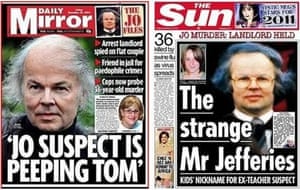
Another example of a defamation case is the Christopher Jefferies ordeal. On the 17th December 2010, Joanna Yeates was murdered after she went missing after a night out with her colleagues in Bristol. Jefferies was Yeates’ landlord and was initially questioned by police as a suspect in the murder of Joanne. Newspapers such as The Sun, Daily Mirror, Daily Mail and Daily Star picked up on this story and published defaming articles about Jefferies, saying he was a “Peeping Tom” and linked him to paedophile crimes. As a result of the defamatory and inaccurate stories published, eight newspapers paid libel damages to Jefferies; the amount he accepted was disclosed.
Internal media regulations are ‘rules’ set by the industry itself rather than the government. These organisations create codes of conduct which impact on media production. Some companies that set regulations are IPSO, PEGI and IMPRESS. Media producers have to take extreme care with what they publish for the public to read and digest. If a journalist was to break a rule in the ISPO Editors’ Code or IMPRESS Standards, this could lead to a fine and a public apology regarding the story; an apology could include corrected false information originally published in the story or acknowledgement that the story contents breached a clause.
The Role of ISPO and IMPRESS.
IPSO and IMPRESS are companies that set internal media regulations for journalists to follow. The IPSO Editors’ Code contains 17 clauses that newspapers and magazines regulated by ISPO have agreed to follow. Some of these clauses are accuracy, privacy, harassment and children. The accuracy clause (clause 1) states that the press must take care not to publish “inaccurate, misleading or distorted information or images”. If a newspaper or magazine does publish inaccurate or misleading information or images, they must be corrected promptly and, if appropriate, publish an apology. The privacy clause (clause 2) states that “everybody is entitled to respect for his or her private and family life, home, health and correspondence”. If a journalist decides to write a story on a person’s private life, they are expected to be able to justify their decision in writing that story and the intrusions made on their private life. An individual can also not be photographed without consent in a private or public place where there is a reasonable expectation of privacy. The harassment clause (clause 3) states that “journalists must not engage in intimidation, harassment or persistent pursuit” in an attempt to get a story. This clause includes the fact that a journalist must not persist in questioning, phoning or photographing a person once they desist. The children clause (clause 6) states that children under 16 must not be “approached or photographed at school without permission of the school authorities”.
The Leveson Inquiry.
The Leveson Inquiry report was published in November 2012. It was set up to investigate the culture, practices and ethics of the UK press. The inquiry was looking into wether self regulations of the press, which was conducted by The Press Complaints Commission, was effective and wether they had too much freedom and power. The Leveson Inquiry was needed as some of the UK press was found out to be following unethical and unlawful practices. The main cause for the Leveson Inquiry was the publics negative response to the UK press’ abuse of their power. News of the World was found to be involved in illegal phone hacking, which lead to police investigations showing that the paper was hacking phones of celebrities, politicians, and members of the British Royal Family between 2005-2007.
Later investigations took place in 2011 which revealed that phones of murdered schoolgirl Milly Dowler, relatives of dead British soldiers and victims of the 7th July 2005 London bombings had also been hacked. Understandably, these revelations lead to a huge public outcry and people left or were sacked within News International, the publisher of papers such as News of the World, The Sun and The Times.
Leveson dedicates almost 12 entire pages to the McCann family in his inquiry. Leveson discusses the publications made regarding Madeleine McCann’s disappearance were “outrageous” and he said that a lot of newspapers were “guilty of gross libels”. One of the newspapers singled out for this was the Daily Star who used the headline “Maddie sold by hard up McCanns”.
The inquiry drew up the conclusion that there had been “a willingness to deploy covert surveillance, blagging and deception in circumstances where it is extremely difficult to see any public interest justification”. Leveson found that there was “a cultural tendency within parts of the press vigorously to resist or dismiss complaints almost as a matter of course”. He also stated that some newspapers are defensive, and on occasion, when an apology is agreed they get their own back by resorting to “high-volume, extremely personal attacks on those who challenge them”. Leveson spoke about how newspapers had recklessly pursued sensational stories: “There has been a recklessness in prioritising sensational stories, almost irrespective of the harm the stories may cause and the rights of those who would be affected”. Families of those in the public eye have had their lives ruined by recklessness and relentless pursuit of the press. Leveson says he found “ample evidence” that parts of the press decided actors, footballers, writers and pop stars were “fair game, public property with little if any entitlement to any sort of private life or respect for dignity”. He adds, “their families, including their children, are pursued and important personal moments are destroyed”.
Leveson recommended that a new self-regulation body was set up. It should be free of “any influence from industry and government”. Leveson added, “it should be governed by an independent board. The chair and the members of the board must be appointed in a genuinely open, transparent and independent way”. This recommendation lead to the formation of IPSO.
Radston High School
Your editor instructs you to go to a Radston school to follow up information that a group of sixth form students there has been coercing other students, one as young as 12, into buying drugs from them.
In an email, a parent who wishes to remain anonymous said:
“My son, who is aged 13 and in the second year at Radston High School, was shaking like a leaf when he returned home on Friday. At first he said he had been bullied by some older boys but later confessed that he had been threatened by them into handing over £25 I had given him towards the cost of a school trip. His brother, who is 12, was also accosted but ran away.
“My eldest boy was then given a package containing white tablets and instructed how to use them. The boys said that now he was one of their ‘customers’ he would be expected to make regular purchases from them or face the consequences. “I have reported this to the headmaster, who has called in the police to investigate.”
Question:
Explain the potential legal and ethical considerations that could arise when writing a story based on the information above.
The IPSO Editors’ Code has a clause reflecting on how and when children can be presented in the media. Clause 6 states that children must not be approached or photographed at school without permission of the school authorities. Children under 16 should not be interview or photographed if their welfare and safety is at stake. The contents of this story would put these children at a risk of bullying or physical abuse; especially if they continued to attend the same school afterwards.
How ethics in journalism will impact my FMP?
Ethics in journalism will impact my FMP by adding restrictions to people I can and can’t interview as well as where and when. For example, if my story was based around or on a child under the age of 16, I would not be able to approach them at school without the school authority’s permission or if the story contains issues surrounding their or another child’s welfare. This is due to clause 6 of the IPSO Editors’ Code of Practice. Another example is if my story had a focus point of suicide, I would have to take care how I report that due to clause 5 of the IPSO Editors’ Code. Clause 5 states that “when reporting suicide, to prevent stimulative acts care should be taken to avoid excessive detail of the method used, while taking into account the media’s right to report legal proceedings”. This would mean I have to report this story with great care and sensitivity in mind.
Journalism and Regulation in the Digital Age.
Many new issues have appeared due to social media platforms and the digital age itself. Some of these issues are trolling, phishing and social media influences. Trolling is a person or group of people who purposefully start arguments and/or upset people over the internet. The abuse trolls can hurl at people consist of personal insults, attacking family members or friends and starting arguments. Trolls can make racist, homophobic or sexist to get a reaction out of some people. A “troll”, Sean Duffy, was jailed for 18 weeks due to the fact he mocked a deceased person over various websites.
Professor Mark Griffiths has said ‘online people feel anonymous and disinhibited. They lower their emotional guard and in the heat of the moment they troll either reactively or proactively.’ The amount of online bullying/ trolling has increased by 88% over the past 5 years. Mariah Carey was attracted by trolls when she was accused of photoshopping an image of herself. Former Girls Aloud member, Nicola Roberts, was subject of over 3,000 nasty text messages from an ex-boyfriend containing threats to stab and burn her.
There is a ‘mute’ button on Twitter that can block certain words or phrases from appearing on your personal timeline or in your notifications. You can privatise your accounts on social media to filter who can see your profile, allowing complete control over your accounts and who can comment/ see your posts.
Phishing is an attempt of trying to steal your most personal and valuable information. For example; passwords, banking details and security question answers. There are multiple types of phishing, some being, fake customer support accounts, fake banking emails or calls or fake mobile phone providers. Spambot comments are comments that can appear at the top of or in the mix of comments beneath videos or photos. These comments can include a URL that leads to a phishing website that attempts to gain access to your personal information such as usernames or passwords.
Online influencers have a mass following and use this platform to promote products/ lifestyles for money. The things they promote can be harmful and dangerous, however they do not get the blame if somebody tries the things they’re promoting and winds up in a bad situation, wether this be ill as a result of trying the product at hand or mentally negatively impacted. People such as Kim Kardashian have a huge following of mostly young females who admire the influencer and are easily tricked into buying products they’re promoted in hopes they look like them/ get a body similar to theirs. This can not only lead to physical but mental illness. Kim Kardashian is known to promote diet suppressing lollipops and slimming tea to her hundreds of millions of followers.
Unit 4 Media Regulation – Notes
What is IPSO and what do they do?
IPSO (Independent Press Standards Organisation) is an independent organisation which monitors newspapers and magazines in the UK to ensure that they are following the Editors’ Code. They investigate complaints made about printed material, provide advice for journalists and editors and make newspapers and magazines publish corrections if they breach the Editor’s’ Code.
https://www.ipso.co.uk/what-we-do/
The Editors’ Code.
ACCURACY:
The Editors’ Code states that publications must not post inaccurate, misleading or distorted information or images. If and when a notable inaccuracy is published, it must be corrected promptly, and in some cases, an apology must also be published.
THE PUBLIC INTEREST:
This part of the Editors’ Code includes providing readers with information that they are interested in and need to know. This means the journalist cannot write about whatever they would like to but what the public should know. However, there are limits on what journalists can cover, for example, some names involved in crime stories may be concealed for the safety of said individual.
Activity.
I would choose option B as the other two options would breach harassment (clause 3) and because he is under 16 years old, it would breach the clause on children and their privacy (clause 6).
I would choose option C as the other options breach clause 9, reporting of crime and also clause 2, privacy. Disclosing somebody’s name without confirmation of their involvement in the case breaches clause 9 of the Editors’ Code.
I would choose option C as the person the journalist would like to interview is 16. This means you cannot interview them without parent’s permission or else it would breach clause 6. It would also breach clause 2 as the privacy of the 16 year old along with other members of the group has been violated. However, the profile picture of the person is available to view by anybody, but publishing a photo of a 16 year old still breaches clause 6.
External Regulations – laws set by the government.
IPSOs Editors’ Code is an example of internal regulation of the journalism industry in the UK.
DEFAMATION LAW:
A spoken or published statement that harms the reputation to a person and causes serious harm to a person. Serious harm can include injuring somebody’s job reputation, causes a person to be shunned or avoided or exposes a person to hatred or ridicule. A journalist who publishes fake news about a person knowingly could result in being sued. However, if the statement which defames a person is true and evidence is provided, this is allowed to be printed.
I believe The Sun’s front page of Jeremy Corbyn in a bin is very defaming. This front page represents The Sun’s ideology which is that Corbyn is useless and that we should vote tory. The subtitles down the side of the page defame Corbyn massively as they take some of his past actions and represent them as something they’re not, making him seem evil. I believe, if Corbyn wanted to, he could sue this journalist for defamation of himself.
Homework:
Prince Harry photographed at a party where police were called after reports of illegal drug abuse. You are an editor working on ‘Newsround’, and you have to decide how to cover the story on the programme. Discuss how external regulations and the IPSO editors’ code would impact.
If I were an editor working on Newsround and was given this story to cover, I would approach it with caution due to thefact the programme has a target audience of children and young teens.
Due to this target audience, I would not show images or footage of drug use or drugs themselves. I believe those things should not be shown to a young audience through television. As there were only reports of drug abuse and no evidence, it could be classed as defaming to Prince Harry but also othersat that party. This story would also breach clause 2 as the journalist had no right to be at the party.
I personally would not cover this story on a programme such as ‘Newsround’ because of the target audience and the fact nothing was confirmed but only reported.
Leveson Inquiry.
Examples of papers that journalists would’ve worked for:
- The Sun
- The Guardian
- The Express
- Daily Star
- The Telegraph
- Daily Mirror
- The Observer
- The Independant
Journalism and Regulation in the Digital Age.
MAIN ISSUES:
Fake news, trolling, phishing, underage access to indecent content, social media influencers.
TROLLING:
Trolling is a person or group of people who purposefully start arguments and/or upset people over the internet. The abuse trolls can hurl at people consist of personal insults, attacking family members or friends and starting arguments. Trolls can make racist, homophobic or sexist to get a reaction out of some people.
A “troll”, Sean Duffy, was jailed for 18 weeks due to the fact he mocked a deceased person over various websites.
Professor Mark Griffiths has said ‘online people feel anonymous and disinhibited. They lower their emotional guard and in the heat of the moment they troll either reactively or proactively.’
The amount of online bullying/ trolling has increased by 88% over the past 5 years.
Mariah Carey was attracted by trolls when she was accused of photoshopping an image of herself. Former Girls Aloud member, Nicola Roberts, was subject of over 3,000 nasty text messages from an ex-boyfriend containing threats to stab and burn her.
There is a ‘mute’ button on Twitter that can block certain words or phrases from appearing on your personal timeline or in your notifications. You can privatise your accounts on social media to filter who can see your profile, allowing complete control over your accounts and who can comment/ see your posts.
FAKE NEWS:
Fake news is a story published that is not true. Fake news stories can be created with the intention of gaining followers/ shares for personal or business benefits or to spread false information which defames a person or public figure, for example, Donald Trump.
To check if a news story is fake, check if the web address has a common ending (.com, .co.uk, .org), see if the story has been published elsewhere or is being reported on television or radio, evaluate if it seems true and if the information and photos in the article feel reliable and true.
The video demonstrated that if somebody wants to believe something, they will. The photo of Donald Trump with the caption was fake but spread widely and very quickly as people wanted to believe it and make a bad name for him.
Some people can brand stories as ‘fake news’ when they’re not because of the way the story is written. If quotes/ words have been spun, this can lead a person to believe this story is unreliable and possibly not contain any truth, leading others to not believe it. Some people may call a story ‘fake news’ to protect a person, group of people or brand from public harassment or exposure to hatred and ridicule.
PHISHING:
Phishing is an attempt of trying to steal your most personal and valuable information. For example; passwords, banking details and security question answers.
There are multiple types of phishing, some being, fake customer support accounts, fake banking emails or calls or fake mobile phone providers.
Spambot comments are comments that can appear at the top of or in the mix of comments beneath videos or photos. These comments can include a URL that leads to a phishing website that attempts to gain access to your personal information such as usernames or passwords.
SOCIAL MEDIA INFLUENCERS:
Online influencers have a mass following and use this platform to promote products/ lifestyles for money. The things they promote can be harmful and dangerous, however they do not get the blame if somebody tries the things they’re promoting and winds up in a bad situation, wether this be ill as a result of trying the product at hand or mentally negatively impacted. People such as Kim Kardashian have a huge following of mostly young females who admire the influencer and are easily tricked into buying products they’re promoted in hopes they look like them/ get a body similar to theirs. This can not only lead to physical but mental illness. Kim Kardashian is known to promote diet suppressing lollipops and slimming tea to her hundreds of millions of followers.
Social Media Law: an Essential Guide.
Journalists, as well as members of the general public, could easily break the law when using social media. Social media, despite how useful it can be, has caused multiple new laws and regulations to be put in place to control the user activity due to problems it can/ has caused. Social media companies are being asked to commit to a ‘code of conduct’. Ofcom, a government agency, will administer the new code of conduct.
FREE SPEECH VS HARM:
Whilst free speech is a valued principle in many countries, it can go too far; this is where the debate forms. There is a difference between free speech and harm and the line has been crossed many times with the excuse of calling it ‘free speech’. Individual liberty is a British Value, so some people are concerned about the fact our individual liberty being eroded. However, another British Value is the Role of Law.
Demographic: Characteristics of the audience, EG, age, gender, ethnicity, sexuality, geographical location, socio-economic status.
INCOME CATEGORIES:
A – Highest income
B – Professionals
C1 – Managerial
C2 – Unskilled workers
D – Manual workers
E – Lowest income
https://www.theguardian.com/law/2016/aug/12/social-media-law-an-essential-guide
The Journey Begins
Thanks for joining me!
Good company in a journey makes the way seem shorter. — Izaak Walton

 Leigh Gladwin